



Manufacturing and Agriculture Support Job Growth as Private-Sector Expansion Continues
By GLEBM News Desk
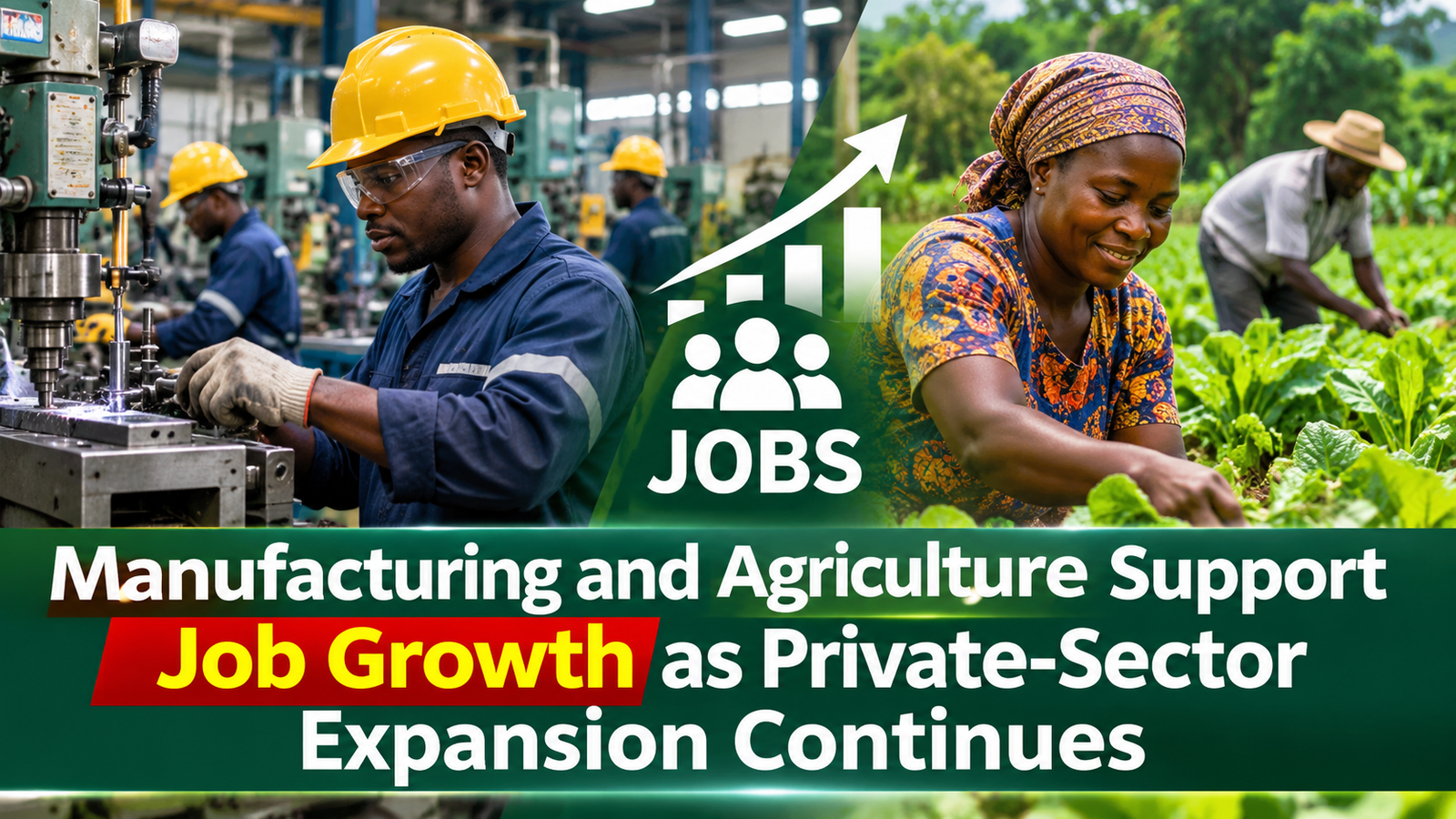
Employment increased in Nigeria’s manufacturing and agricultural sectors in October 2026, even as businesses in wholesale and retail trade and services reported declining employment, according to the latest Purchasing Managers’ Index (PMI) report from Stanbic IBTC Bank Nigeria.
The report, published on Tuesday, November 3, indicated that employment gains remained modest and that overall job creation slowed, highlighting an uneven labour-market picture despite continued growth in private-sector business activity.
Nigeria’s headline PMI stood at 55.7 points in October, down from 56.4 in September. A reading above 50 indicates that business conditions improved compared with the previous month, meaning private-sector activity continued expanding, although the pace moderated.
The survey recorded further increases in output and new orders, supported by improved customer demand and the introduction of new products. These developments helped sustain business activity, with manufacturing and agriculture recording improved employment outcomes as businesses responded to additional orders.
The report also indicated that employment growth slowed to its weakest pace in three months. Some businesses reported that existing staff could manage current workloads, while others increased employment to meet operational requirements.
The contrast between sectors is important because national economic expansion does not automatically translate into job creation across every industry. Manufacturing and agriculture can increase recruitment when production and orders rise, while service providers and retailers may reduce staffing if demand, operating costs or productivity requirements change.
For jobseekers, the findings suggest that employment opportunities may vary significantly by industry. Businesses experiencing stronger orders may require additional production workers, agricultural personnel, logistics support and related services. However, the survey does not provide a complete count of new jobs created or lost across Nigeria.
The report also highlighted continued pressure from rising business costs. Higher fuel and transportation expenses contributed to faster increases in purchase prices, while selling-price inflation reached its highest pace in four months. More than 29 per cent of surveyed businesses increased their charges during October.
These costs have implications for workers as well as employers. Higher transport expenses can reduce the purchasing power of wages, while rising production costs may limit companies’ ability to recruit additional staff or grant substantial salary increases.
Staff costs rose modestly during the month. Businesses that increased employee expenses cited salary adjustments intended to help workers manage living costs, alongside efforts to encourage staff to complete more work.
For organised labour, the findings underline the continuing challenge of negotiating compensation that reflects the cost of living without placing unsustainable pressure on employers. For businesses, the challenge is to retain skilled workers, meet rising demand and manage higher input costs while maintaining financial stability.
The report also showed that private-sector activity had strengthened for nine consecutive months. However, the slower pace of growth in October suggests that sustained expansion cannot be taken for granted, particularly while fuel, transport and other operating expenses remain elevated.