


$630m Investment Deals Set to Support More Than 21,000 Nigerian Jobs
By GLEBM News Desk
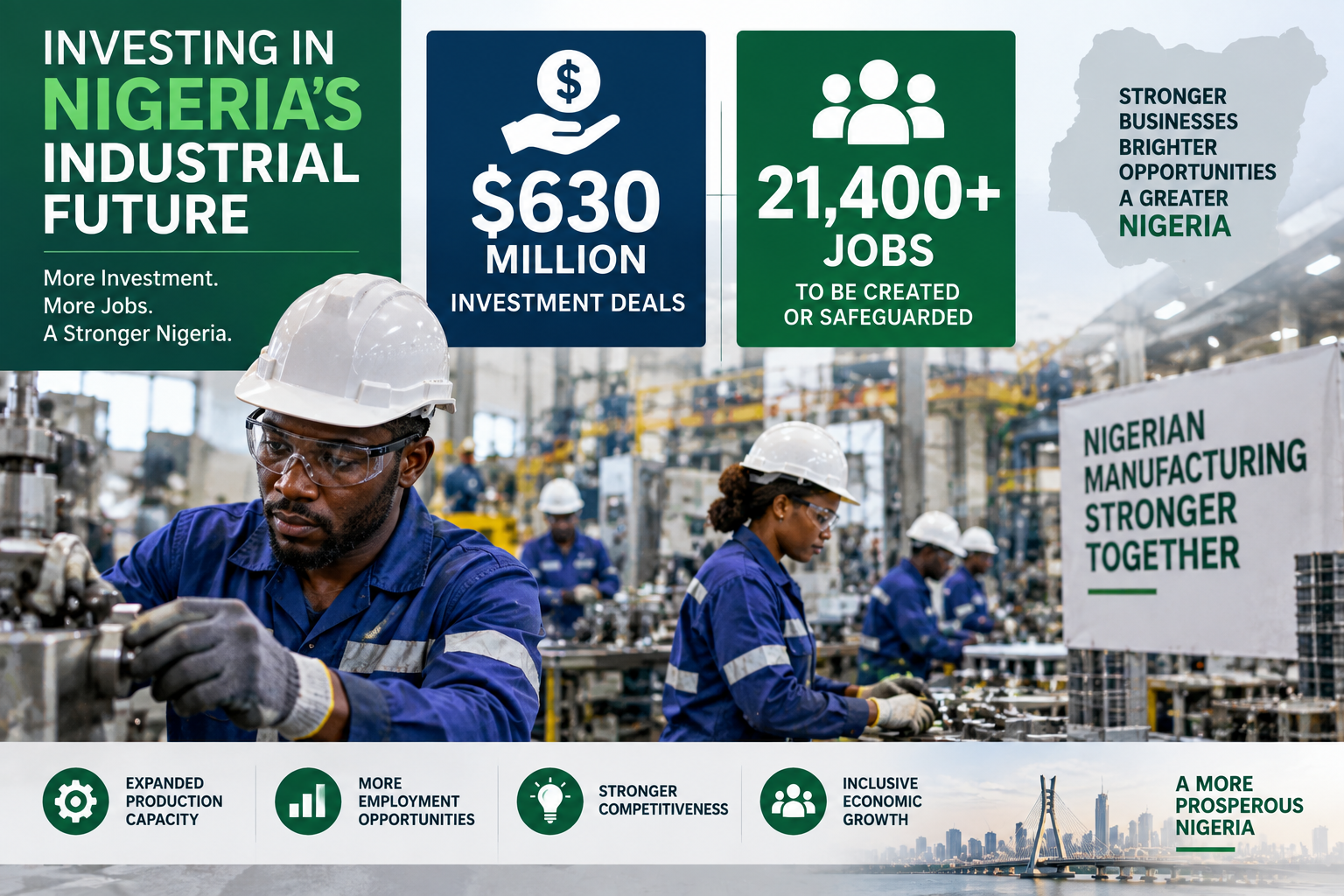
Twenty-three Nigerian companies have reached financial close on investment transactions valued at more than $630 million through a UK-backed programme aimed at helping African businesses attract capital and expand their operations.
The transactions, supported by Manufacturing Africa, have the potential to create or safeguard more than 21,400 direct jobs, according to figures presented at an investment event in Lagos.
The programme has worked with Nigerian businesses since 2019, providing support aimed at improving investment readiness and connecting companies with potential investors and sources of finance.
In total, the programme has supported 72 investment opportunities in Nigeria, of which 23 have progressed to financial close.
The transactions span businesses seeking capital to expand operations, increase production capacity and strengthen their competitiveness.
The scale of the investment is significant for Nigerian businesses at a time when access to long-term capital remains a major constraint for companies seeking to grow.
Many enterprises face difficulties securing financing because of high interest rates, limited collateral, foreign-exchange risks and the relatively short tenor of available commercial credit.
Investment capital can provide companies with a different form of financing, particularly for businesses requiring substantial funds to expand facilities, acquire machinery or enter new markets.
The programme also launched a fundraising toolkit designed to help businesses understand the process of preparing for investment and approaching potential investors.
The resource contains guidance, templates and practical information based on the experience accumulated through investment transactions completed across African markets.
Manufacturing Africa operates in Nigeria and five other African markets, including Ethiopia, Kenya, Rwanda, Tanzania and Senegal.
Across those markets, the programme said it has supported more than 300 companies and developed an investment pipeline worth more than £12 billion.
The wider programme has also reported mobilising more than £2 billion in foreign direct investment and supporting more than 150,000 direct and indirect jobs.
For Nigeria, the latest figures demonstrate the potential impact of improving the connection between local businesses and sources of growth capital.
However, investment mobilisation alone does not eliminate the structural challenges confronting manufacturers. Companies still require reliable power, efficient logistics, predictable regulation, skilled workers and access to affordable inputs.
The ability of businesses receiving new investment to convert capital into sustainable production and employment will therefore depend partly on the wider operating environment.
The launch of the fundraising toolkit is intended to make some of the knowledge accumulated through the investment programme available to a broader group of Nigerian businesses.