


Education Minister Assures Tertiary Unions of Full Implementation of 2026 Agreements
By GLEBM News Desk
The Federal Government has pledged to fulfil its obligations under agreements reached with unions representing academic and non-academic staff in Nigeria’s tertiary institutions, as it seeks to restore confidence in collective bargaining and prevent further industrial disputes.
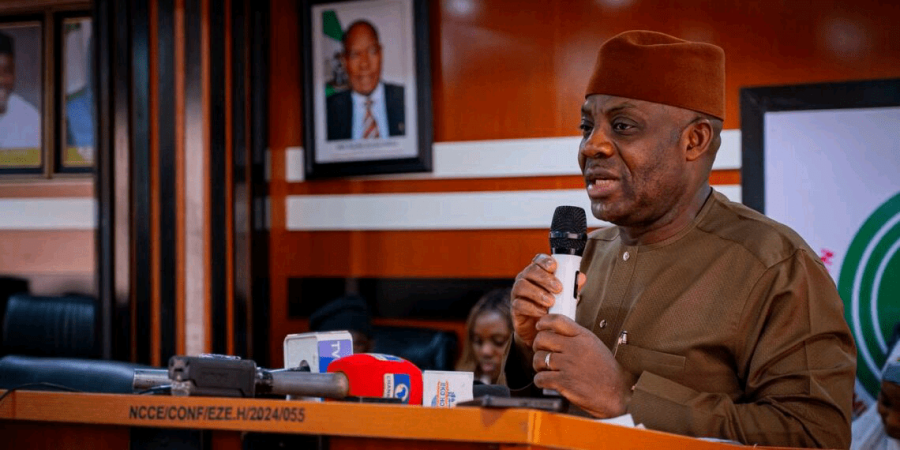
Minister of Education Tunji Alausa gave the assurance in Abuja during the unveiling of the 2026 agreements covering staff in universities, polytechnics and colleges of education.
The government said the agreements provide for the Consolidated Academic Tools Allowance and the Consolidated Non-Teaching Tools Allowance, which took effect from January 1, 2026, in line with the applicable implementation arrangements.
The commitments cover several categories of tertiary education workers, including academic staff and eligible non-teaching personnel. Their implementation is important to staff welfare and to the broader effort to maintain stable academic activities across the country’s public tertiary institutions.
Alausa acknowledged that delays and incomplete implementation of earlier agreements had contributed to recurring disputes between government and staff unions. Such disagreements have periodically resulted in strikes, interrupting teaching, research and administrative activities.
The minister said the administration was committed to meeting its obligations and urged union leaders to sustain dialogue rather than allow unresolved issues to disrupt academic programmes.
The government also announced plans to expand the existing implementation and monitoring committee for ASUU-related agreements into a unified structure covering other academic and non-academic unions. The arrangement is intended to monitor progress, identify outstanding commitments and provide a coordinated response to implementation challenges.
Chairman of the Federal Government Tertiary Institutions Expanded Negotiation Committee, Yayale Ahmed, said more than 70 per cent of the agreement with the Federal Government had been achieved as of the time of his remarks, while expressing optimism that outstanding provisions could be addressed through the implementation process.
The reported progress provides an indication of the government’s assessment, but the remaining obligations will need to be clearly identified and independently tracked to establish whether the agreements are being fully implemented.
The dispute history makes that verification particularly important. Workers’ unions have repeatedly argued that the credibility of negotiations depends on whether commitments are honoured after agreements have been signed.
For tertiary institutions, prolonged industrial disputes can disrupt academic calendars, delay students’ graduation and weaken research output. They can also increase costs for families and create uncertainty for students whose programmes are affected by repeated interruptions.
The government’s latest pledge therefore presents an opportunity to strengthen relations with the unions, provided implementation proceeds transparently and concerns are addressed before they develop into major disputes.
The decisive measure of success will be whether eligible workers receive the agreed benefits, outstanding issues are resolved within clear timelines and both sides can rely on a monitoring process that produces practical results rather than further assurances.