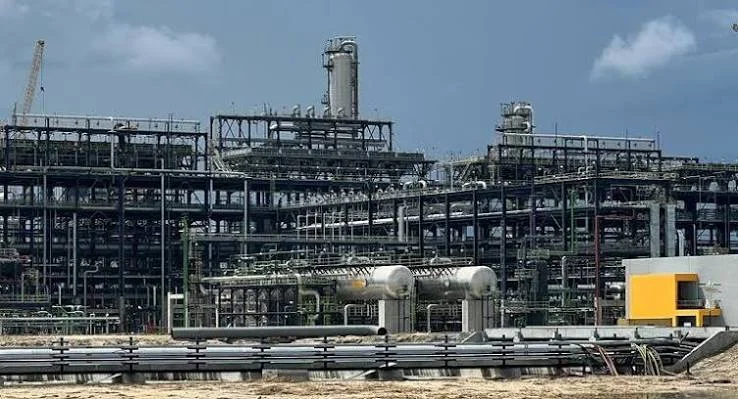



Nigeria Records ₦1.44 Trillion Oil Revenue Shortfall Despite Higher Global Crude Prices
By GLEBM News Desk
Nigeria’s gross oil revenue declined by approximately ₦1.44 trillion in the first half of 2026, despite a substantial increase in international crude oil prices, highlighting persistent weaknesses in the country’s ability to convert favourable global market conditions into government income.
Figures contained in the Second Quarter and Half-Year 2026 Budget Implementation Report showed that gross oil revenue fell to ₦7.88 trillion between January and June, compared with approximately ₦9.32 trillion in the corresponding period of 2025.
The 15.45 per cent decline occurred even as average international crude oil prices rose to $104.52 per barrel in the second quarter of 2026, up from $74 per barrel during the same period a year earlier.
The average price was also significantly above the government’s 2026 budget benchmark of $64.85 per barrel.
However, the increase in crude prices was not sufficient to compensate for production constraints, lower-than-expected oil receipts, petroleum tax shortfalls and statutory deductions.
The Budget Office attributed the weak performance partly to reduced oil production and lifting, limited investment in the sector and longstanding operational challenges. It also identified fiscal deductions under the Petroleum Industry Act as a factor affecting net oil revenue.
Nigeria generated only 42.22 per cent of its projected half-year gross oil revenue target of ₦18.65 trillion, leaving a shortfall of approximately ₦10.78 trillion.
Average crude oil production improved to 1.72 million barrels per day in the second quarter, compared with 1.68 million barrels per day in the corresponding period of 2025. Nevertheless, output remained below the government’s budget target of 1.84 million barrels per day.
The report identified crude oil theft, pipeline vandalism, security challenges, inadequate investment in modern infrastructure, corruption and regulatory uncertainty among the factors limiting the sector’s performance.
A breakdown of the revenue figures revealed particularly weak performance in petroleum profit and gas taxes, which generated ₦2.92 trillion against a projected ₦11.96 trillion. The resulting shortfall of approximately ₦9.05 trillion accounted for a substantial portion of the overall revenue gap.
Oil and gas royalties generated ₦4.07 trillion against a target of ₦5.42 trillion, while gross profit oil from crude and gas sales recorded ₦285.64 billion against a projected ₦1.17 trillion.
The figures demonstrate that Nigeria’s oil revenue challenge is not simply a question of international prices. Production capacity, investment, security and the efficiency of revenue collection remain central to the country’s fiscal performance.
For the Federal Government, lower-than-expected oil receipts can complicate budget implementation, increase pressure on borrowing and reduce the resources available for infrastructure, public services and development programmes.
The findings also raise questions about the effectiveness of efforts to improve oil production and attract investment into the upstream petroleum industry.
Strengthening pipeline security, improving operational efficiency, resolving regulatory uncertainties and encouraging new investment will be essential if Nigeria is to benefit more consistently from international crude oil price movements.
The latest figures underline the need to focus not only on the price of oil but also on the country’s ability to produce, sell and collect revenue from its petroleum resources.