



Nigeria’s Agriculture Contributes Over 22% to GDP but Generates Just 4.1% of Export Earnings
By GLEBM News Desk
Nigeria’s agriculture sector contributes more than 22 per cent to the country’s Gross Domestic Product but accounts for only about 4.1 per cent of total export earnings, highlighting a major gap between the size of the domestic agricultural economy and its performance in international trade.
The disparity has renewed attention on the need to move Nigeria’s agricultural sector beyond primary production and towards processing, value addition, quality certification and export-oriented agribusiness.
Recent analysis of Nigeria’s trade structure shows that agriculture remains one of the country’s largest contributors to economic activity, particularly through crop production, livestock and other rural economic activities. Yet its contribution to export earnings remains comparatively small.
The situation illustrates one of the central challenges facing Nigeria’s agricultural economy: the country produces substantial quantities of agricultural commodities but captures a much smaller share of the value generated when those commodities are processed and sold internationally.
Agricultural Production Versus Export Value
Nigeria has significant agricultural potential, with millions of people involved directly or indirectly in farming and related activities.
However, production alone does not automatically translate into export revenue.
A farmer who sells an unprocessed commodity receives only part of the value eventually generated when that commodity is cleaned, processed, packaged, certified, transported and marketed in international markets.
For example, agricultural products such as cocoa, cashew, sesame and soybeans can generate considerably more value when processed into finished or semi-finished products.
This is why the development of agro-processing has become increasingly important to Nigeria’s economic diversification strategy.
Recent data also showed that Nigeria’s agricultural export earnings declined significantly in the second quarter of 2026, falling 36.09 per cent year-on-year to ₦802.99 billion from ₦1.26 trillion in the corresponding period of 2025.
The decline makes the gap between agricultural production and export performance even more significant.
Why Value Addition Matters
Nigeria’s agricultural exporters face several challenges, including inadequate storage facilities, poor transportation networks, inconsistent electricity supply, limited access to affordable financing and difficulties meeting international standards.
Export markets also require traceability, quality control, packaging and certification.
For small farmers, meeting these requirements individually can be difficult.
This creates an opportunity for cooperatives, aggregators, processors and larger agribusinesses to connect farmers to formal markets.
The development of stronger agricultural value chains could allow farmers to earn more while creating additional employment in processing, logistics, packaging and distribution.
From Farm to Factory
Stakeholders increasingly argue that Nigeria needs to build an agricultural system in which farming is connected directly to industrial production.
The objective would be to increase the volume of agricultural commodities processed locally before export.
Such a strategy could help Nigeria earn more foreign exchange from the same agricultural output while reducing dependence on the export of raw commodities.
It could also create stronger links between agriculture and manufacturing.
A cocoa-processing factory, for instance, creates demand not only for cocoa farmers but also for packaging companies, transport operators, engineers, warehouse operators and financial institutions.
Financing Remains Critical
Access to patient capital remains another challenge.
Agriculture operates on cycles that do not always align with short-term commercial lending.
Farmers and agribusinesses often require financing before planting, during production and after harvest.
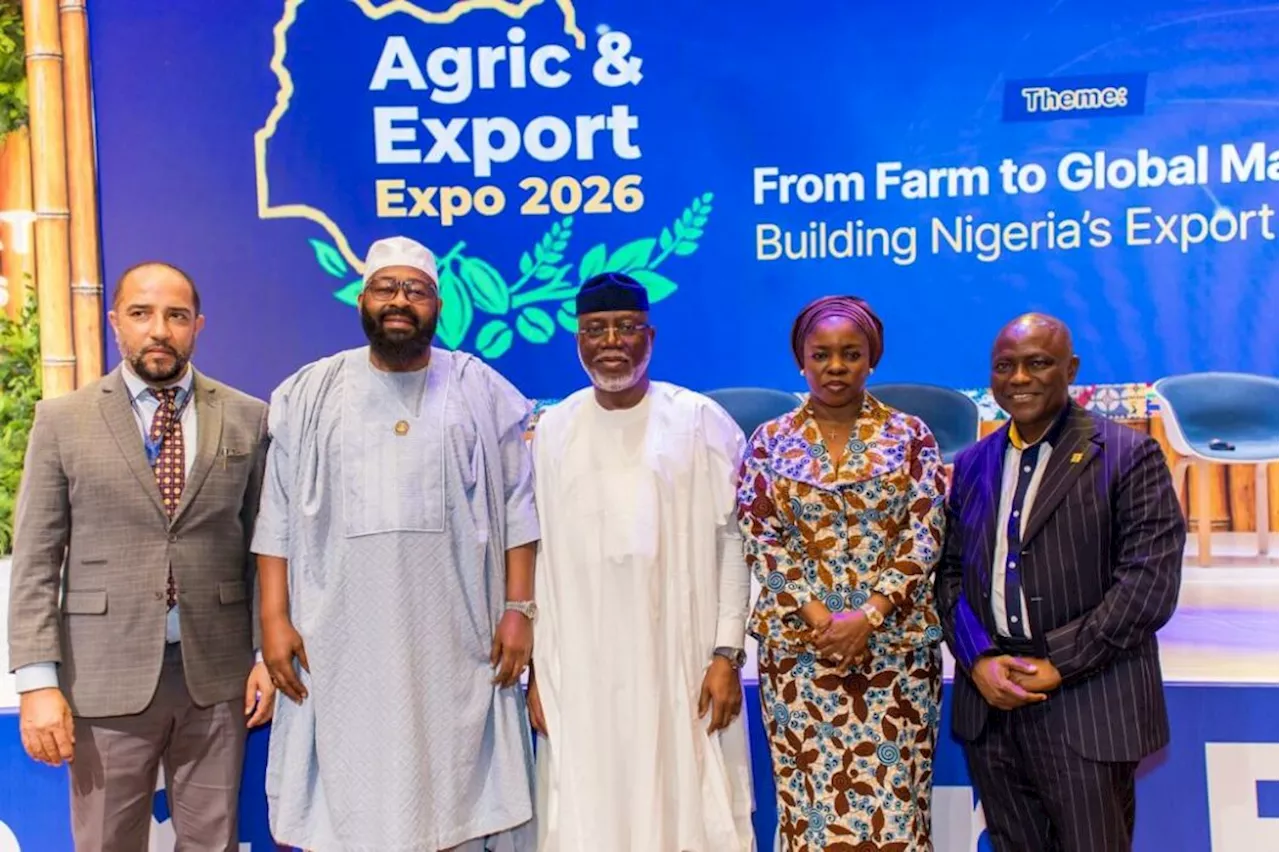
At the recent FirstBank Agric Expo, stakeholders called for more structured and patient capital to support agribusiness and non-oil exports.
The financing challenge is particularly important for young entrepreneurs seeking to enter agricultural processing.
Without adequate capital, many businesses remain small and unable to invest in modern machinery, storage or international certification.
The Export Opportunity
Nigeria’s agricultural sector already has products with international demand, including cocoa, cashew, sesame and soybeans.
The challenge is turning that demand into a larger and more predictable source of foreign exchange.
Achieving this will require greater investment in production, processing, infrastructure, market intelligence and export logistics.
It will also require closer cooperation between farmers, private investors, financial institutions and policymakers.
The country’s agriculture sector is therefore sitting on a substantial economic opportunity, but the size of the opportunity will depend increasingly on how successfully Nigeria converts agricultural production into higher-value domestic processing and competitive exports.