


ILO-Backed Skills Training Opens Employment Pathways for Refugees in Ethiopia
By GLEBM News Desk
ILO-supported, market-driven skills training in Ethiopia’s Somali Region is helping refugees gain employable skills and build sustainable livelihoods.
Targeted, market-driven skills development supported by the International Labour Organization (ILO) is expanding access to decent work for refugees and host communities in Ethiopia’s Somali Regional State, where formal employment opportunities remain limited.
In Kebribeyah, the ILO—through the PROSPECTS Partnership, funded by the Government of the Netherlands—has aligned vocational training with local labour market needs to promote self-reliance and economic inclusion. One beneficiary, Abdi Hussien Tahir, 32, illustrates how demand-led training can translate into sustainable livelihoods.
Abdi, who was born and raised in the Kebribeyah refugee settlement, holds a diploma in General Metal Fabrication from Jigjiga Polytechnic College (JPTC). Despite his qualifications, he struggled to find steady work. “I used to volunteer in the community, but it was irregular and I only earned a minimal income,” he said.
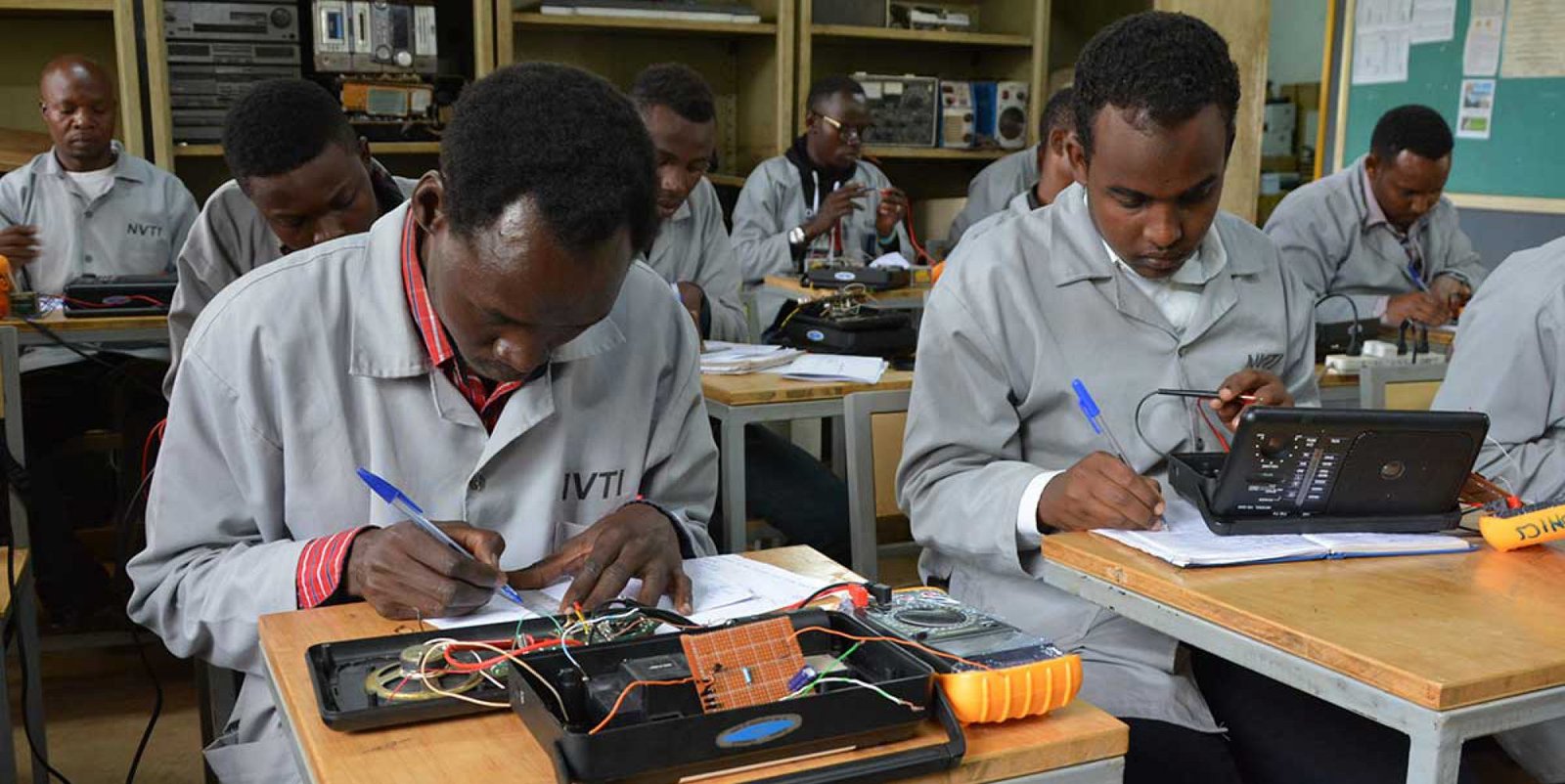
To bridge the gap between training and employment, the ILO supported a three-month Building Electrical Installation programme delivered at the JPTC Kebribeyah Satellite Centre. The course combined classroom instruction with hands-on practical sessions and workplace exposure at a local enterprise.
The approach proved decisive. “This time, I knew the occupation had demand in the area. I also had a passion for it,” Abdi said. He ranked among the top-performing trainees and, upon graduation, received a starter toolkit—including a multimeter, pliers, voltage tester, electrician’s knife, meter, and hammer—an ILO-supported measure designed to help graduates transition directly into work.
The establishment of the Kebribeyah Satellite Centre was intended to lower access barriers for refugees and nearby communities. Gizeshwork Tadesse, National Skill Development Officer, explained: “By establishing the centre in Kebribeyah, an area with a large refugee population and limited formal training opportunities, we aim to equip youth with market-relevant skills, enhance employability, and foster economic inclusion.”
For Abdi, proximity mattered. “Previously, I had to live in Jigjiga town with very limited support,” he said. “Training closer to home allowed me to focus entirely on learning.”
Today, Abdi applies his skills across both refugee and host communities, undertaking household electrical work and small installation contracts. He earns about 8,000 Birr per month (approximately US$55), supporting his family and building a more secure future. His wife, a member of the host community, works in a government office, and together they are raising two children.
Looking ahead, Abdi plans to grow his enterprise. “I still want to learn more and start contracting bigger buildings and advance my skill,” he said.
The ILO’s PROSPECTS programme aims to improve access to decent work for forcibly displaced people and host communities by linking training to real labour demand. Stephen Opio, Chief Technical Advisor for ILO PROSPECTS in Ethiopia and Sudan, said: “Abdi’s story is a powerful example of how inclusive skills development can unlock potential and foster resilience. By investing in market-relevant training, we are helping individuals build sustainable livelihoods and contribute to their communities.”
— GLEBM News