


Every Statistic Represents a Child: Nigeria, ECOWAS, ILO Renew Commitment to Ending Child Labour
By Glory John
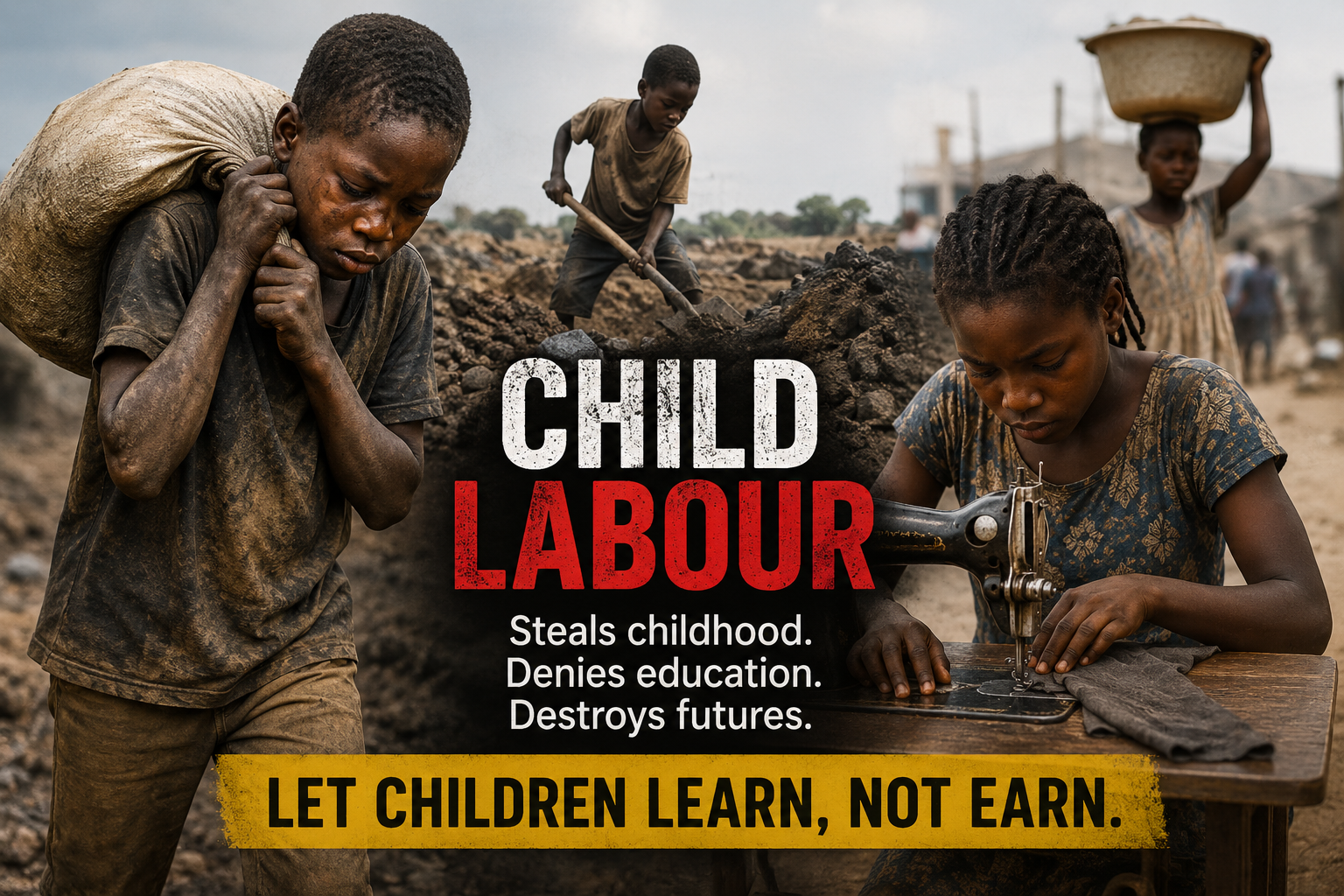
Behind every child labour statistic is a young Nigerian whose education, safety and future are at risk, officials said on Tuesday as government agencies and international partners renewed their commitment to ending child labour across the country.
Speaking during the validation of the 2024 National Child Labour Survey Report in Abuja, representatives of the Federal Government, the International Labour Organisation (ILO), the National Bureau of Statistics (NBS) and the ECOWAS Commission stressed that reliable data must drive future action to protect vulnerable children.
Representing ILO Country Director Vanessa Phala, Senior Specialist on Workers’ Activities, Inviolata Chinyangarara, said the exercise goes beyond validating a report.
“This gathering is not simply about validating the report; it is about reaffirming our collective responsibility to the children of Nigeria. Behind every statistic is a child whose laughter, learning and future depend on the decisions we make today,” she said.
Permanent Secretary of the Federal Ministry of Labour and Employment, Kamil Shoretire, warned that child labour continues to undermine children’s rights, expose them to dangerous work and trap families in cycles of poverty.
He noted that children remain vulnerable in sectors such as agriculture, domestic work, mining, construction and street trading, adding that the new survey will help government agencies identify priority areas for intervention.
Shoretire said the findings will also strengthen labour inspection systems, improve social protection programmes and support responsible business practices.
At the regional level, Head of the Social Affairs Division of the ECOWAS Commission, Alves D’Almada, described Nigeria as a leader in labour statistics across West Africa.
He, however, warned that child labour and forced labour remain widespread regional challenges requiring stronger cooperation among member states.
“We reaffirm ECOWAS’ commitment to eliminating both through stronger regional cooperation, peer learning and sustained action,” D’Almada said.
Also speaking, Statistician-General of the Federation and Chief Executive Officer of the National Bureau of Statistics, Prince Adeyemi Adeniran, represented by Bishop Ohioma, urged stakeholders to make technical contributions that would enhance the credibility and usefulness of the report.
He said the final survey would provide policymakers with stronger evidence for developing interventions capable of reducing child labour and protecting the rights and future of Nigerian children.
The 2024 National Child Labour Survey Report is expected to guide government policies and national strategies aimed at eliminating child labour while supporting Nigeria’s commitment to achieving Sustainable Development Goal Target 8.7.