



ILO, Tripartite Constituents, Federal Ministry of Youth Development, Convening Youth Partners Push for Future-Ready Skills at World Youth Skills Day 2026
By Darasimi K.
Stakeholders call for greater investment in technical, digital, entrepreneurial and green skills to prepare Nigerian youth for the future of work
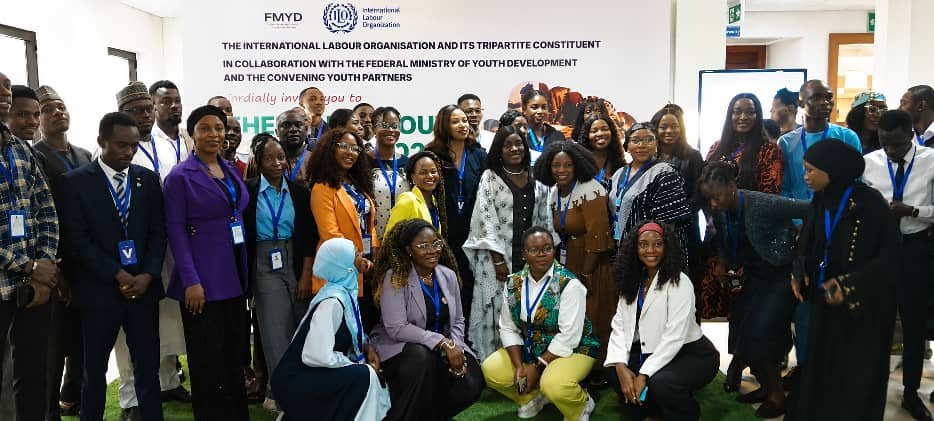
The International Labour Organization (ILO) and its tripartite constituents, in collaboration with the Federal Ministry of Youth Development and the convening youth partners, have reaffirmed their commitment to equipping young Nigerians with future-ready skills as they commemorated World Youth Skills Day 2026 today, at the United Nations House in Abuja.
The event, held under the global theme, “Skills for a Shared Future,” brought together representatives of government institutions, employers’ and workers’ organizations, development partners, policymakers, educators and young people to explore practical solutions for strengthening skills development, promoting decent work and improving employment opportunities for Nigeria’s growing youth population.
Throughout the event, speakers emphasized that preparing young people for an evolving labour market, shaped by digitalization, artificial intelligence, climate transition and technological innovation, requires stronger collaboration among governments, employers, workers’ organizations, development partners and young people themselves.
Representing the Minister of Youth Development, Mr. Angwaogu Michael, Director of the Planning, Research and Promotion Department at the Federal Ministry of Youth Development, said the theme reflects the growing global recognition that the future of every nation depends largely on how well it prepares its young population.
“This year’s theme, Skills for a Shared Future, is a clear reminder that investing in the skills of young people is essential for building resilient, proactive and sustainable societies,” he said.
He noted that the Federal Government remains committed to implementing policies that expand opportunities for Nigerian youth through education, entrepreneurship, innovation and skills acquisition.
According to him, the National Youth Policy and the National Youth Development Action Plan continue to provide the strategic framework for improving youth employability, entrepreneurship, digital literacy and access to economic opportunities.
He also highlighted the Ministry’s flagship initiative, ‘One Youth, Two Skills,’ which seeks to equip every young Nigerian with at least two market-relevant skills capable of promoting employment, innovation and self-reliance.
“Our goal is to ensure that young Nigerians are not only employable but are also equipped to become innovators, entrepreneurs and contributors to national development,” he stated.
Mr. Michael commended the International Labour Organization and other partners for their sustained commitment to youth empowerment.
“We appreciate the International Labour Organization for its leadership in promoting jobs and skills development, and we commend every organization supporting young people across Nigeria.”
Speaking on behalf of ILO Country Director, Ms. Vanessa Phala, Senior Specialist on Workers’ Activities, Ms. Inviolata Chinyangarara, said the celebration was more than a symbolic observance, describing it as a renewed commitment by governments, employers, workers’ organizations and development partners to ensure young people acquire the skills needed for productive employment, decent work and sustainable livelihoods.
“Today, we celebrate the talent, energy, innovation, creativity and immense potential of young people while reaffirming our shared commitment to ensuring that their skills translate into productive employment, decent work and sustainable livelihoods,” she said.
She noted that this year’s global theme, “Skills for a Shared Future,” was deliberately chosen to emphasize that preparing young people for the future of work requires collective action.
“‘Skills for a Shared Future’ reminds us that preparing young people for the future of work is a collective responsibility. That is why we have brought together such a diverse range of partners to have this important conversation.”
According to Chinyangarara, rapid advances in digitalization, artificial intelligence, demographic shifts and the transition to greener economies are reshaping labour markets worldwide.
While these transformations are creating new opportunities for innovation, productivity and employment, she warned that they are also increasing the risk of unemployment, underemployment and inequality for young people who lack access to relevant skills and decent work opportunities.
“Investments in future-ready skills, lifelong learning and inclusive labour market opportunities are more critical now than ever before if we are to ensure that no young person is left behind.”
She disclosed that the ILO is strengthening partnerships with organizations such as the National Talent Corporation (NTC) and other stakeholders to support the transition to green economies while positioning young people at the centre of sustainable development.
Describing Nigeria’s youthful population as one of its greatest development assets, Chinyangarara said millions of young Nigerians enter the labour market every year with ambition, creativity and determination, yet many continue to face barriers to productive and decent employment.
With a population of over 230 million people, she said Nigeria is well positioned to harness its demographic dividend if strategic investments are made in skills development and employment creation.
She cited labour market data showing that in the second quarter of 2024, young people aged 15 to 24 recorded the country’s highest unemployment rate at 6.5 per cent, while 14.4 per cent were neither in employment, education nor training (NEET). Many of those who are employed, she noted, remain in vulnerable and low-productivity jobs.
“Some of the skills currently being taught have become obsolete. Many graduates from technical and vocational institutions do not possess the competencies required by today’s labour market.”
She stressed that addressing these challenges requires stronger collaboration among governments, employers’ organizations, workers’ organizations, development partners, training institutions and young people themselves.
Chinyangarara further disclosed that through its collaboration with the Federal Ministry of Labour and Employment, supported by the GIZ SKYE Programme, the ILO has contributed to strengthening Nigeria’s employment governance framework, including support for the revision of the National Employment Policy 2025.
She added that the organization is also working with the Federal Ministry of Youth Development to support the review of the National Youth Employment Action Plan to ensure it reflects emerging labour market trends and equips young women and men with relevant skills for the changing world of work.
According to her, the partnership also focuses on strengthening employment services, promoting competency-based training, advancing the recognition of prior learning, and modernizing job centres and migrant resource centres to respond to opportunities in digital employment, remote work and the platform economy.
She also noted that the International Labour Conference recently adopted Convention No. 193 on Decent Work in the Platform Economy, describing it as a landmark step towards improving labour standards in emerging forms of work.
Earlier, the representative of the Minister of Labour and Employment, Dr. Tisa Chila, Director of Skills Development at the Federal Ministry of Labour and Employment, described this year’s theme as both timely and strategic.
“Skills are no longer merely instruments for obtaining employment; they are the foundation for innovation, economic growth, social inclusion, environmental sustainability and national competitiveness.”
He noted that rapid advances in artificial intelligence, automation, digital technology and climate adaptation are redefining global labour markets.
According to him, Nigeria’s large youth population presents tremendous opportunities for national development, provided young people acquire skills aligned with future labour market demands.
Dr. Chila highlighted the Revised National Employment Policy 2025 as one of the government’s major achievements in addressing unemployment and underemployment while promoting sustainable job creation.
He explained that the policy prioritizes digital skills, entrepreneurship, green jobs, labour market adaptability and remote work opportunities.
The Ministry, he added, is modernizing job centres and migrant resource centres nationwide to improve career guidance, labour market information, skills matching and employment services.
“Our vision is to ensure that every young Nigerian has access to reliable employment services and opportunities regardless of geographical location.”
He also emphasized the importance of strengthening Nigeria’s Labour Market Information System to generate credible data capable of informing policy decisions and aligning training programmes with industry demands.
Dr. Chila called for stronger collaboration among governments, employers, workers’ organizations, technical institutions, civil society organizations and development partners.
He stressed that employers must become more actively involved in curriculum development, apprenticeship programmes, internships and workplace learning.
He also advocated greater investment in Technical and Vocational Education and Training (TVET) to ensure graduates possess practical competencies required in today’s economy.
According to him, sectors such as renewable energy, sustainable agriculture, environmental management, artificial intelligence, cybersecurity, software development, e-commerce and digital marketing present enormous opportunities for Nigeria’s youth.
He further stressed that young people should not merely be beneficiaries of employment policies but active participants in policy formulation and implementation.
Also speaking, the representative of the Director-General of the Nigeria Employers’ Consultative Association (NECA), Ms. Jennifer Yelwa, reaffirmed NECA’s commitment to closing Nigeria’s workforce skills gap through strategic investments in technical, digital and entrepreneurial training.
She said building a highly skilled workforce remains critical to improving business productivity, stimulating innovation and driving sustainable socio-economic development.
The Stakeholders reaffirmed their commitment to strengthening partnerships that will expand access to quality education, market-driven skills training and decent employment opportunities, with the shared goal of ensuring that no Nigerian youth is left behind in the future of work.


The graphics are amazing and the game mechanics are top notch. I spend a lot of my free time here now. Highly recommend playtimevicsottoapk to everyone
Finally found a place where the gameplay feels fair and the community is actually helpful. Had a great run last night on pkbatpkrgameonline, highly recommend it to all poker fans.