



Nigeria’s Young People Have Talent, but Not Enough Opportunities
As technology transforms industries and new forms of work emerge across the world, Nigeria faces a defining challenge: can it equip its young population with the skills needed to compete in tomorrow’s economy before the opportunity slips away?
By Raymond Akorede
Every year, millions of young Nigerians leave school believing they have done everything society has asked of them. They spend years in classrooms, earn certificates, celebrate graduation with family and friends, and step into adulthood carrying the hope that education will unlock opportunities for a better life. Yet for many of them, the journey into the labour market quickly becomes a frustrating encounter with a reality they never anticipated. Employers are increasingly searching for workers with digital expertise, technical competence, entrepreneurial thinking and practical workplace experience, while many graduates discover that the qualifications they hold no longer match the demands of a rapidly changing economy.
This widening disconnect between education and employment is gradually becoming one of Nigeria’s most pressing development challenges. It is no longer enough to possess academic credentials alone. Around the world, advances in artificial intelligence, automation, renewable energy, digital technology and the platform economy are reshaping the way businesses operate and the type of workforce they require. Occupations that barely existed a decade ago are now among the fastest-growing career paths, while many traditional jobs are evolving at a pace that demands continuous learning and adaptation. For a country with one of the youngest populations in the world, the implications are profound. Nigeria possesses an enormous demographic advantage, but unless young people are equipped with skills that reflect the realities of today’s workplace, that advantage could easily become a missed opportunity.
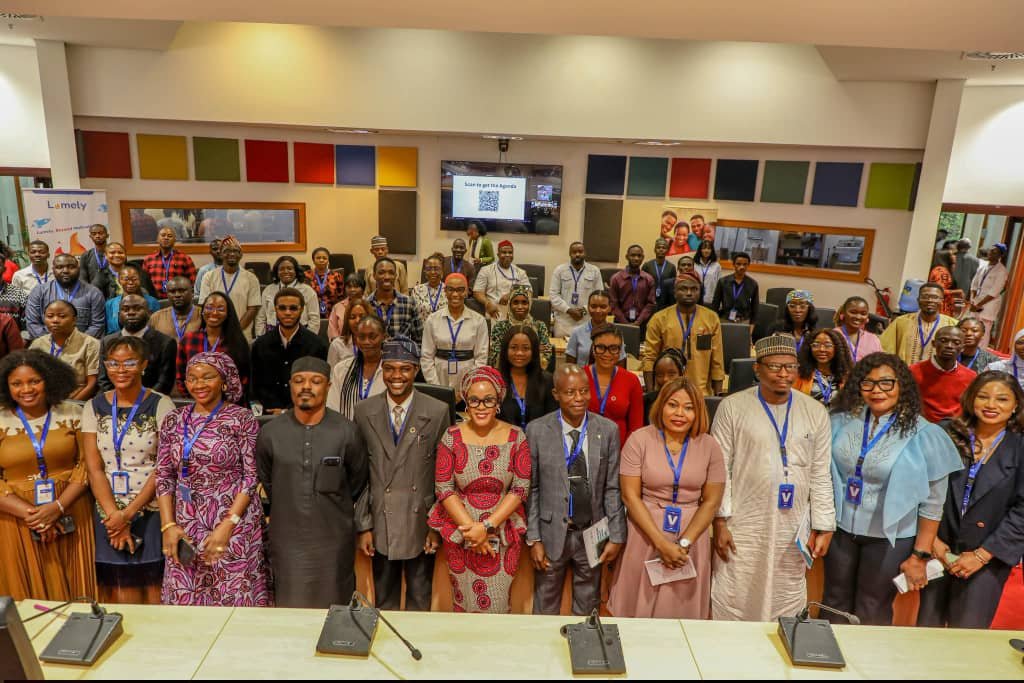
These concerns dominated conversations during the commemoration of the 2026 World Youth Skills Day held at the United Nations House in Abuja. While the event brought together government officials, employers’ organisations, workers’ representatives, development partners and young people, the discussions extended far beyond a single day’s celebration. At the heart of every presentation was a common message: preparing young Nigerians for the future of work requires more than policy declarations or periodic training programmes. It requires a complete rethinking of how education, skills development and employment are connected.
Representing ILO Country Director, Ms. Vanessa Phala, Senior Specialist on Workers’ Activities, Ms. Inviolata Chinyangarara, described the challenge as one that demands urgent attention from governments, employers, workers’ organisations, educational institutions and development partners alike. According to her, the future of work is already unfolding across the globe, driven by digitalisation, artificial intelligence, demographic shifts and the transition towards greener economies. These global trends are creating entirely new industries and employment opportunities, but they are also exposing weaknesses in countries whose education and training systems are failing to evolve at the same pace.
She explained that technological transformation should not be viewed as a threat but as an opportunity capable of driving innovation, productivity and inclusive economic growth. However, she warned that these opportunities would remain beyond the reach of many young Nigerians if they continue to leave schools and vocational institutions without the competencies employers now demand.
“Investments in future-ready skills, lifelong learning and inclusive labour market opportunities are more critical than ever before if we are to ensure that no young person is left behind,” Chinyangarara said.
Her remarks reflected a growing global concern that the gap between education and employment is widening. Across both developed and developing economies, employers increasingly report difficulty recruiting workers with the right technical, digital and problem-solving abilities, even as unemployment remains high among young graduates. The challenge, experts argue, is not necessarily a shortage of educated people but a shortage of people whose skills correspond with emerging labour market realities.
For Nigeria, the stakes are particularly high. With a population exceeding 230 million people and one of the largest youth populations in the world, the country possesses an enormous reservoir of human capital. Every year, millions of young people enter the labour market carrying ambition, creativity and determination. Many aspire to become engineers, software developers, entrepreneurs, healthcare professionals, teachers, designers and innovators capable of contributing to national development. Yet too many find themselves competing for a limited number of opportunities while employers simultaneously report shortages of specialised skills.
The International Labour Organization believes this contradiction illustrates one of the greatest challenges confronting the country’s labour market. During the discussions, Chinyangarara noted that labour market data continues to reveal significant barriers facing young Nigerians. Youths between the ages of 15 and 24 recorded the highest unemployment rate of 6.5 per cent during the second quarter of 2024, while 14.4 per cent were neither in employment, education nor training (NEET). Even among those fortunate enough to find work, many remain concentrated in vulnerable, low-paying and low-productivity jobs offering little opportunity for career advancement or long-term economic security.
The figures, according to labour experts, point to a structural problem that extends beyond unemployment statistics. They reflect a labour market where education, vocational training and employment opportunities are often poorly connected. Young people invest years in acquiring qualifications only to discover that businesses require entirely different competencies. At the same time, employers struggle to recruit workers with practical experience, digital literacy and technical expertise, forcing many companies to spend additional resources retraining new employees after recruitment.
One of the strongest observations made during the World Youth Skills Day event concerned the state of Nigeria’s Technical and Vocational Education and Training (TVET) system. Chinyangarara argued that while technical education remains one of the country’s greatest opportunities for developing a competitive workforce, many training programmes have failed to keep pace with changes occurring across modern industries.
“Some of the skills currently being taught have become obsolete. Many graduates from technical and vocational education and training institutions do not possess the competencies required by today’s labour market,” she observed.
The statement resonated with many participants because it captured a challenge already evident across numerous sectors of the Nigerian economy. Businesses increasingly require workers who understand digital systems, data analysis, automation, renewable energy technologies, cybersecurity, software development and advanced manufacturing processes. Yet many graduates continue to receive training based on outdated curricula that offer limited exposure to these rapidly expanding fields.
For the ILO, addressing this challenge requires more than simply updating school curricula. It demands a broader transformation of how societies think about learning itself. The organisation believes that education should no longer be viewed as something completed upon graduation. Instead, learning must become a lifelong process that allows workers to continuously acquire new knowledge and adapt to changing labour market conditions throughout their careers.
That philosophy is becoming increasingly relevant as artificial intelligence and digital technologies continue to reshape occupations across virtually every sector of the economy. Jobs are changing faster than ever before, and the workers who succeed will likely be those who are willing and able, to learn continuously, embrace innovation and develop competencies that remain relevant in an increasingly technology-driven world.
.



The app installation was a breeze. No glitches and the graphics are top notch. Glad I decided to use newjilislotdownload.